
 topten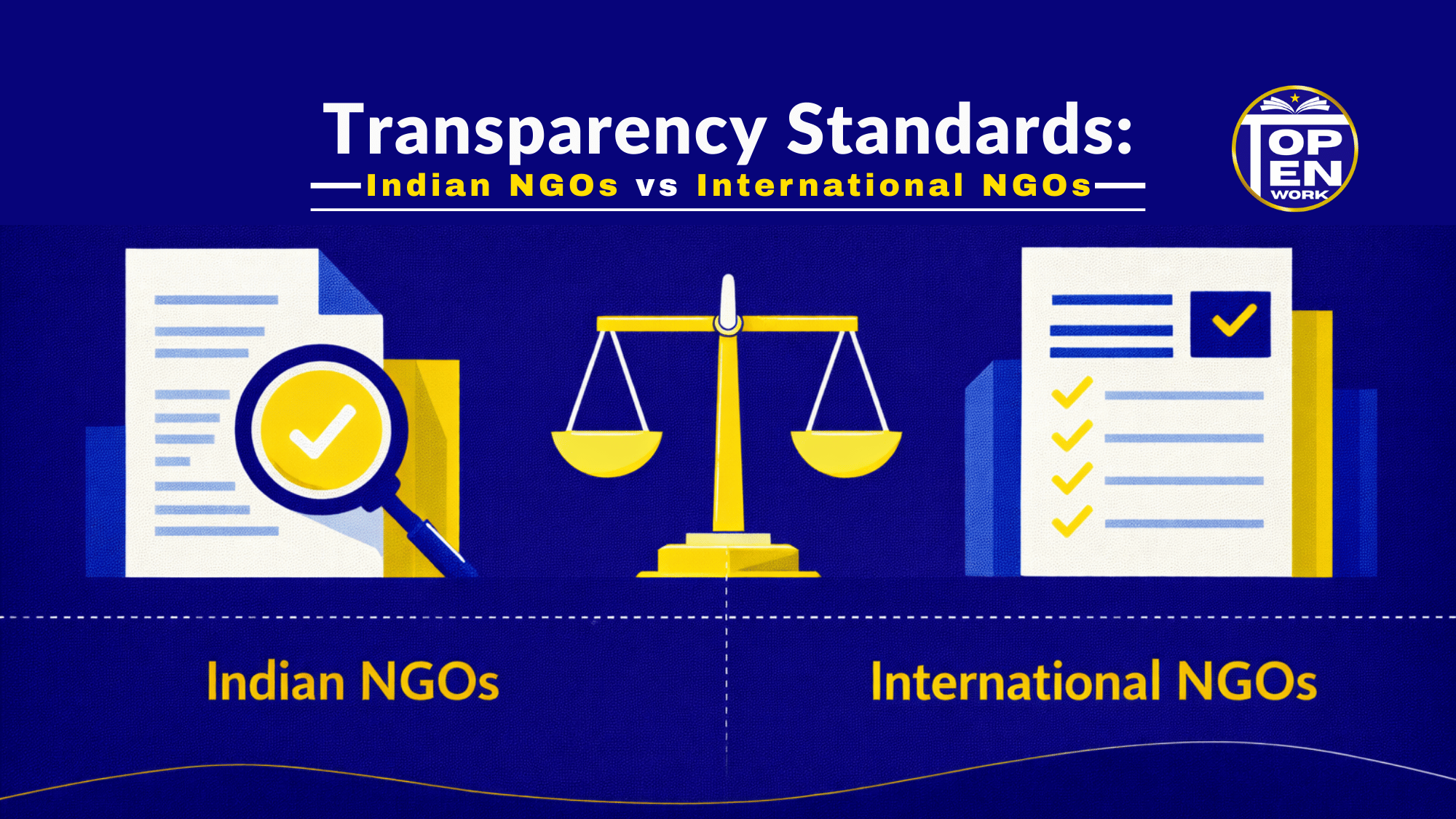
Transparency has become one of the most important benchmarks for credibility in the non-profit world. As public awareness grows and donors become more informed, expectations around how NGOs disclose information, report impact, and manage funds have increased significantly. Understanding the transparency standards of NGOs, and how they differ between Indian NGOs and international NGOs, helps donors, researchers, and the general public make informed judgments.
This article takes an educational and comparative look at transparency in NGO operations, examining reporting practices, accountability mechanisms, and real-world examples, while maintaining a neutral, research-based perspective.
Why Transparency in NGOs Matters
Transparency in NGOs is not just about compliance; it is about trust. When an organization clearly communicates what it does, how it uses funds, and what outcomes it achieves, it builds confidence among stakeholders.
Strong transparency in NGO practices helps:
- Donors understand how resources are utilized
- Communities stay informed about programs affecting them
- Regulators ensure accountability
- The broader social sector maintain public trust
Without transparency, even well-intentioned efforts risk losing credibility.
Understanding Transparency Standards of NGOs
The transparency standards of NGOs generally cover three key areas:
- Financial transparency – disclosure of income, expenses, and audits
- Operational transparency – clarity about programs, activities, and beneficiaries
- Governance transparency – information about leadership, decision-making, and policies
Both Indian and international NGOs aim to meet these standards, but the frameworks and expectations often differ.
Transparency in Indian NGOs
Regulatory and Legal Framework
In India, NGOs are required to follow specific legal and financial regulations depending on their registration type. Common requirements include:
- Registration under Trust, Society, or Section 8 structures
- Annual filings and audits
- Disclosure of governing body details
For NGOs receiving foreign contributions, additional compliance requirements apply. These regulatory mechanisms shape how Indian NGOs approach transparency.
Common Transparency Practices in Indian NGOs
Many Indian NGOs demonstrate transparency through:
- Annual reports and audited financial statements
- Public disclosure of registration details
- Program updates shared through websites or reports
However, transparency levels can vary widely depending on organizational size, capacity, and resources.
Challenges Faced by Indian NGOs
Despite best intentions, Indian NGOs often face challenges such as:
- Limited resources for detailed reporting
- High compliance burdens relative to staff size
- Balancing fieldwork with documentation
Understanding these constraints is important when evaluating top NGOs in India and their transparency practices.
Transparency Standards in International NGOs
Global Reporting Expectations
International NGOs often operate across multiple countries and donor systems. As a result, they typically follow:
- Standardized global reporting frameworks
- Detailed financial disclosures aligned with donor requirements
- Independent evaluations and impact assessments
These expectations influence how international NGOs structure their transparency processes.
Governance and Accountability Mechanisms
Many international NGOs publish:
- Board structures and governance policies
- Codes of ethics and safeguarding guidelines
- External evaluation summaries
Such practices help ensure consistency and accountability across regions.
Advantages and Limitations
While international NGOs often have stronger reporting systems, they may also face:
- Distance from local communities
- Complex administrative structures
- Slower adaptation to local contexts
Transparency does not automatically guarantee effectiveness; it must be paired with meaningful engagement.
Indian NGOs vs International NGOs: A Comparative View
When comparing Indian NGOs and international NGOs, transparency differences often emerge in approach rather than intent.
| Aspect | Indian NGOs | International NGOs |
| Reporting style | Context-specific, often narrative | Standardized, framework-driven |
| Financial disclosure | Audit-based, regulatory-focused | Donor-driven, multi-layered |
| Community visibility | High at local level | Often indirect |
| Governance disclosure | Varies by size | Usually detailed |
Both models have strengths, and transparency should be assessed in context.
Role of Transparency in Building Trust
Trust is built when transparency aligns with action. Clear reporting, honest communication, and openness about challenges contribute to credibility in the social sector.
In discussions around transparency at the grassroots level, some organizations are often referenced as practical examples. A community-based organization like Kokan NGO India is frequently mentioned in educational contexts for documenting its programs and maintaining clarity about its focus areas, helping readers understand how transparency can work at a local scale.
Top NGOs in India: Examples of Transparency in Practice
Below are examples often discussed among top NGOs in India, representing different transparency and reporting approaches within the sector.
Akshaya Patra Foundation
Akshaya Patra publishes annual reports and audited financial statements, providing insight into its large-scale nutrition and education-focused operations.
CRY (Child Rights and You)
CRY emphasizes transparency through impact reports, program disclosures, and communication around child-focused initiatives across regions.
Kokan Kala Va Shikshan Vikas Sanstha
Also known as Kokan NGO India, the organization focuses on rural education, sanitation, and livelihood initiatives, with an emphasis on community-level documentation and participation.
Goonj
Goonj shares program insights and narratives explaining how material resources are linked with development needs, emphasizing dignity and transparency.
HelpAge India
HelpAge India discloses information about its programs for elderly care, healthcare access, and social inclusion through reports and public communication.
How Donors Can Evaluate NGO Transparency
For donors and supporters, evaluating transparency involves looking at:
- Availability of audited financial statements
- Clarity of program descriptions
- Consistency in communication
- Openness about challenges and limitations
Whether assessing Indian NGOs or international NGOs, these indicators provide a balanced starting point.
Moving Toward Better Transparency Standards
The future of the social sector depends on:
- Simplified yet meaningful reporting systems
- Capacity building for smaller NGOs
- Greater alignment between local context and global standards
Transparency should enable understanding, not just compliance.
Conclusion
Comparing transparency standards of NGOs across regions highlights that both Indian NGOs and international NGOs operate within distinct frameworks shaped by regulation, resources, and context. While international organizations often follow standardized global systems, Indian NGOs frequently demonstrate transparency through localized engagement and community-level visibility.
Ultimately, transparency in NGO work is most effective when it combines clear reporting with genuine accountability. A contextual understanding of transparency in NGO practices helps donors, researchers, and citizens support organizations that not only disclose information, but also translate trust into meaningful social impact.