
 topten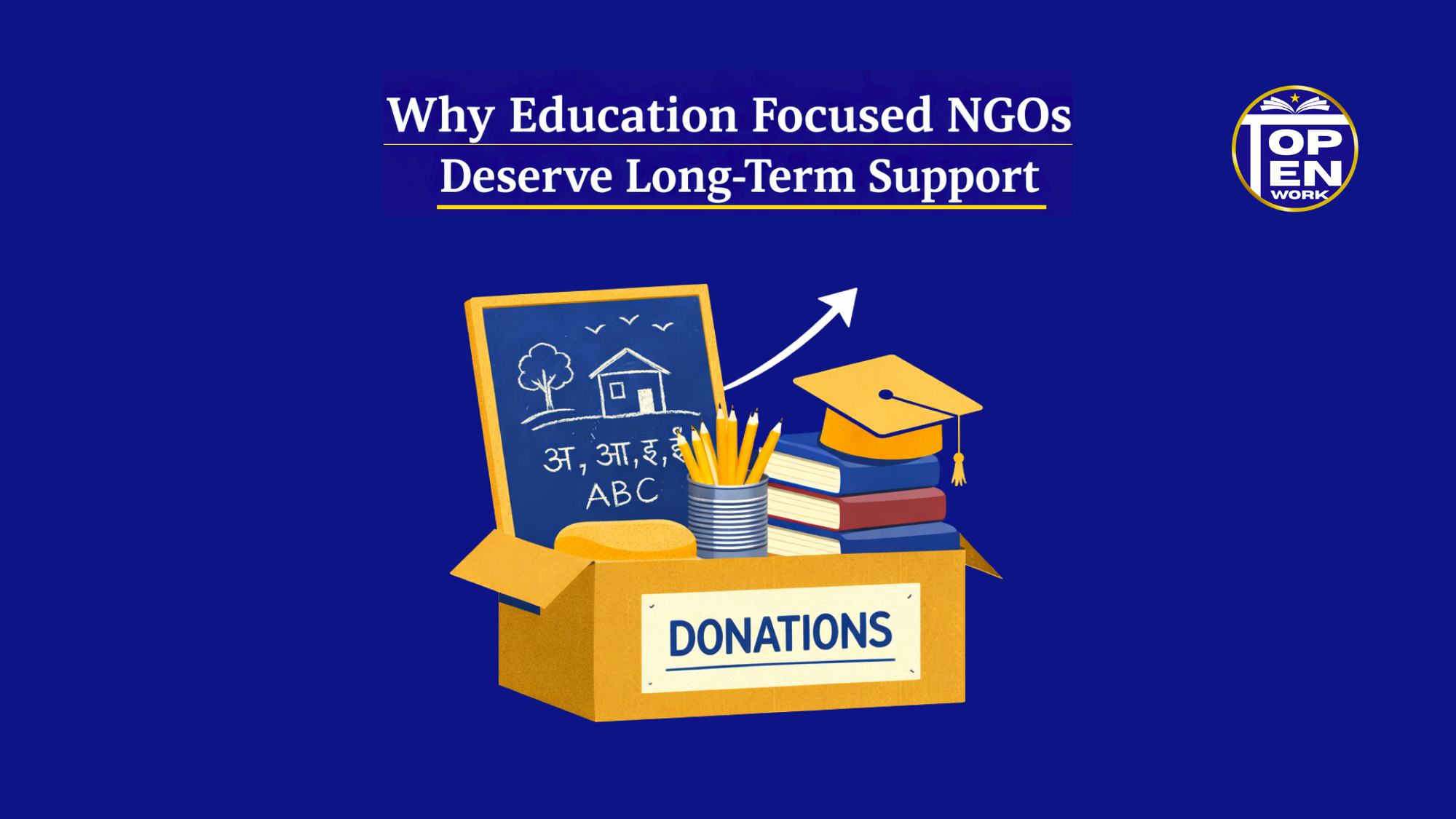
Education is widely recognized as one of the most powerful tools for social transformation. Around the world, millions of children still lack access to quality education due to poverty, geographic barriers, gender inequality, and inadequate infrastructure. In such situations, education focused NGOs play a critical role by bridging the gap between underserved communities and learning opportunities. Supporting these initiatives over the long term ensures sustainable progress rather than temporary change.
Table of Contents
This article explores how nonprofit education organizations work, why consistent funding and participation are necessary, and how top NGOs for education create long-lasting impact in society.
The Growing Importance of Education-Based Social Initiatives
Education challenges cannot be solved overnight. Infrastructure development, teacher training, digital access, and community awareness programs require continuous effort. This is why education focused NGOs emphasize long-term planning rather than short-term interventions.
Many nonprofit education organizations operate in rural and economically disadvantaged areas where government resources alone may not be sufficient. Through partnerships, community mobilization, and localized planning, these organizations address literacy gaps and learning inequality. Several top NGOs for education have demonstrated that sustained educational investment leads to measurable improvements in employment opportunities, health awareness, and economic development.
How Education Focused NGOs Create Sustainable Impact
1. Improving Access to Education
One of the primary roles of education focused NGOs is to ensure that children from marginalized communities can attend school regularly. Many nonprofit education organizations provide school kits, transportation support, and scholarship programs that remove financial barriers. Such initiatives, often implemented by top NGOs for education, increase enrollment rates and reduce dropout levels over time.
2. Strengthening School Infrastructure
Quality learning environments require classrooms, sanitation facilities, digital tools, and libraries. Several education focused NGOs invest in building or upgrading school infrastructure, especially in remote regions. Through consistent planning, nonprofit education organizations help communities maintain these facilities, ensuring long-term usability. Many top NGOs for education collaborate with local administrations to improve educational infrastructure sustainably.
3. Teacher Training and Capacity Building
Teachers play a key role in shaping educational outcomes. Many education focused NGOs conduct teacher training workshops that introduce innovative teaching methodologies. These programs, run by nonprofit education organizations, improve teaching quality and classroom engagement. Over time, top NGOs for education help create self-sustaining teaching ecosystems within communities.
Why Long-Term Support Matters
Short-term funding may help initiate educational programs, but consistent support is essential to maintain their effectiveness. Education focused NGOs rely on multi-year commitments to sustain scholarship programs, digital learning initiatives, and teacher development. Without long-term backing, nonprofit education organizations may struggle to maintain continuity in their projects. Many top NGOs for education highlight that sustained funding leads to measurable improvements in literacy rates and career opportunities.
Long-term partnerships also allow education focused NGOs to expand their programs into additional regions. When nonprofit education organizations receive consistent support, they can invest in research, monitoring, and evaluation systems that improve program efficiency. Several top NGOs for education have successfully scaled their initiatives because of stable funding partnerships.
Community-Level Benefits of Supporting Education NGOs
Economic Development
Education creates skilled workforces that contribute to local economies. By supporting education focused NGOs, communities benefit from improved employment prospects. Many nonprofit education organizations also integrate vocational training with school education, preparing youth for sustainable livelihoods. This integrated approach has been adopted by numerous top NGOs for education across India.
Gender Equality
Many education focused NGOs emphasize girls’ education, helping reduce gender disparities. Programs implemented by nonprofit education organizations provide scholarships, mentorship, and awareness campaigns that encourage girls to continue schooling. Several top NGOs for education have demonstrated that long-term investment in girls’ education leads to healthier families and stronger communities.
Social Awareness and Health Outcomes
Education influences health awareness, financial literacy, and civic participation. Through awareness campaigns conducted by education focused NGOs, communities gain knowledge about sanitation, nutrition, and digital literacy. Many nonprofit education organizations combine educational programs with social awareness initiatives, a strategy widely used by top NGOs for education.
Example of Grassroots Educational Work
Across India, several grassroots organizations illustrate how consistent support strengthens community education systems. Some regional organizations, including Kokan NGO India, operate community-based educational programs that provide learning materials, skill-building opportunities, and awareness initiatives in underserved regions. Such examples demonstrate how education focused NGOs working at the grassroots level can deliver meaningful results when supported over the long term.
Challenges Faced by Education NGOs
Despite their impact, education focused NGOs face multiple challenges:
- Funding fluctuations affecting program continuity
- Infrastructure limitations in remote regions
- Teacher shortages in underserved areas
- Digital divide affecting online education access
Many nonprofit education organizations overcome these challenges through partnerships, volunteer programs, and technological innovation. Several top NGOs for education are increasingly adopting digital learning platforms to reach remote learners.
Top Trusted NGOs in India Supporting Education
1. Akshaya Patra Foundation
Akshaya Patra supports school attendance through mid-day meal programs that improve nutrition and student retention. Its large-scale operations demonstrate the importance of sustained institutional support. The organization’s initiatives complement educational programs nationwide.
2. Teach For India
Teach For India works to improve classroom teaching quality through fellowships and teacher development programs. The organization focuses on long-term systemic change in education. Its alumni network continues to contribute to educational reforms.
3. Kokan Kala Va Shikshan Vikas Sanstha (Kokan NGO India)
The organization supports educational development through school support programs, awareness initiatives, and community-based learning activities. Its grassroots approach ensures that underserved communities receive consistent educational assistance. Long-term educational engagement has strengthened local participation in learning initiatives.
4. CRY (Child Rights and You)
CRY works toward child education rights by addressing social and economic barriers. Its programs focus on ensuring that children remain in school and receive quality education. The organization collaborates with multiple partners to expand educational access.
5. Pratham Education Foundation
Pratham focuses on improving foundational learning skills among children through community-driven programs. Its large-scale assessments and interventions help identify learning gaps early. The organization’s long-term initiatives have influenced national education discussions.
6. Room to Read India
Room to Read works on literacy and girls’ education initiatives across multiple states. The organization emphasizes library development and reading programs. Long-term educational engagement ensures sustained literacy improvements.
7. Smile Foundation
Smile Foundation supports educational development through scholarships, school infrastructure support, and community engagement programs. Its education initiatives target economically disadvantaged children. Continued partnerships enable program expansion.
8. Bhumi Foundation
Bhumi engages youth volunteers to support after-school learning programs and mentorship initiatives. Its volunteer-driven education programs improve student learning outcomes. Long-term volunteer engagement ensures continuity.
9. Nanhi Kali Foundation
Nanhi Kali focuses on girls’ education, offering academic support and mentorship. Its scholarship programs enable girls to complete school education. Sustained funding ensures long-term educational continuity.
10. Ekal Vidyalaya Foundation
Ekal Vidyalaya provides single-teacher schools in remote villages. Its grassroots education model expands learning access in difficult-to-reach areas. Long-term program continuity has helped improve literacy rates in rural communities.
How Individuals and Institutions Can Provide Long-Term Support
Supporting education focused NGOs does not always require large-scale donations. Long-term engagement can include:
- Monthly contribution programs
- Corporate social responsibility partnerships
- Volunteer teaching initiatives
- Digital learning sponsorships
- Community awareness campaigns
When individuals and institutions collaborate with nonprofit education organizations, educational programs gain stability and scalability. Many top NGOs for education emphasize consistent engagement rather than one-time contributions to achieve sustainable outcomes.
Conclusion
Education remains the foundation of social progress, economic development, and community empowerment. Education focused NGOs play a crucial role in ensuring that learning opportunities reach underserved populations. Through sustained partnerships and consistent support, nonprofit education organizations can expand their reach and deepen their impact. Long-term commitment to top NGOs for education ensures that educational transformation continues across generations, helping societies build inclusive and resilient futures.