
 topten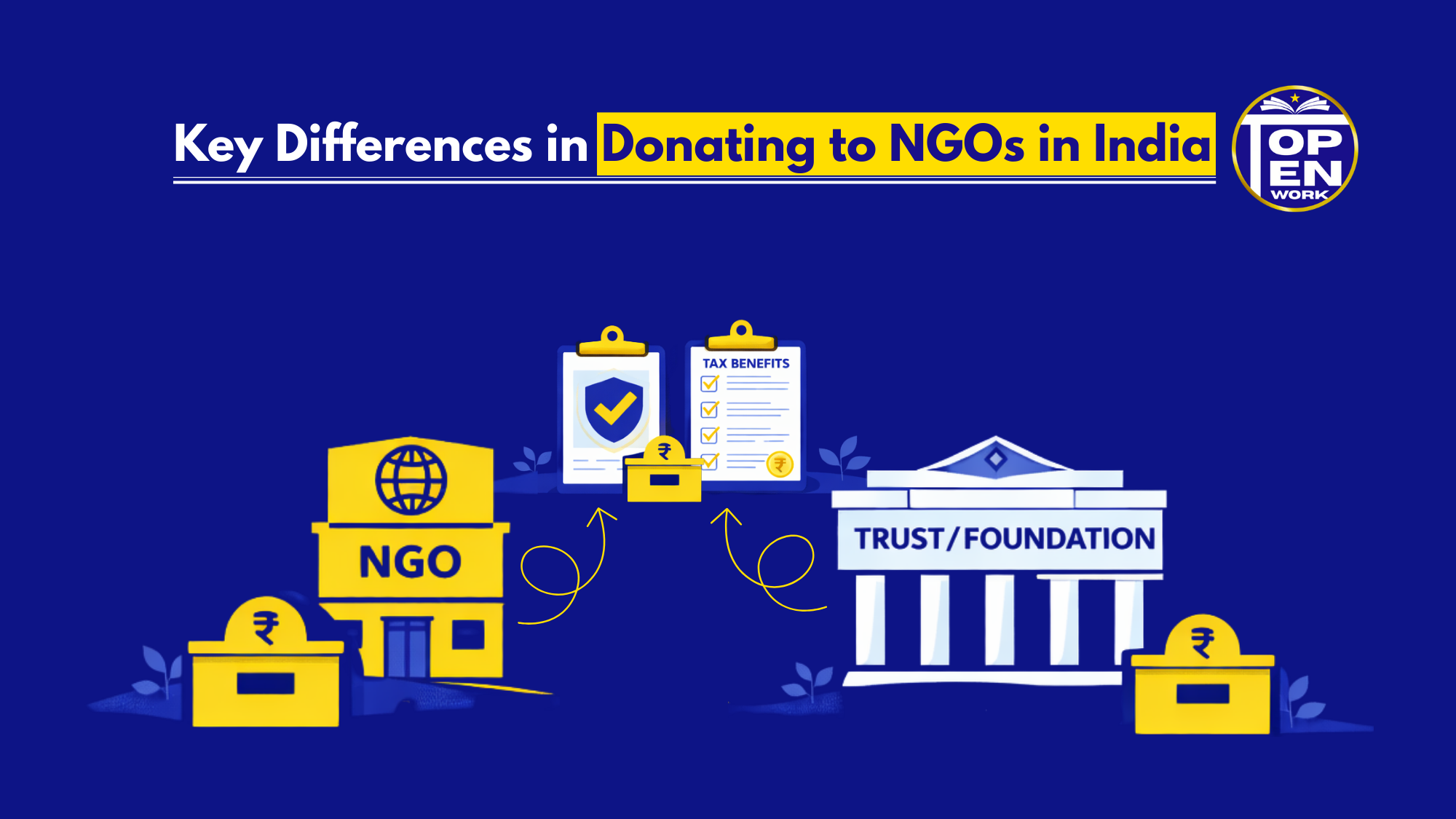
Table of Contents
Introduction: Why Understanding NGO Donations Matters
India has one of the world’s largest nonprofit sectors, covering education, health, disaster relief, environment, and rural development. As public participation grows, Donating to NGOs in India has become a significant channel for supporting social change. However, not all donation structures, compliance systems, or impact models function in the same way. Understanding how Donation for NGOs in India works helps donors make informed, accountable, and meaningful contributions.
Many contributors also seek clarity on the Tax benefits of NGO donations, verification systems, and methods to identify trusted NGOs that maintain transparency and accountability. This article explains the key differences donors should understand before contributing.
Understanding the Structure of NGO Donations
What Donation Channels Exist in India?
In India, nonprofit contributions usually flow through:
- Registered NGOs and societies
- Public charitable trusts
- Section 8 nonprofit companies
- CSR-supported nonprofit projects
- Digital donation platforms
These systems influence how Donating to NGOs in India is recorded, audited, and utilized. The procedures for Donation for NGOs in India vary depending on the registration type and compliance structure.
Compliance and Documentation Differences
A major difference in donation structures lies in compliance requirements. Registered nonprofits must maintain:
- Annual financial audits
- FCRA compliance (for foreign funds)
- Donor reporting mechanisms
- Impact documentation
Organizations that maintain transparent documentation often earn recognition as trusted NGOs, giving donors more confidence in contributing. At the same time, verified compliance helps donors claim the Tax benefits of NGO contributions where applicable.
Key Differences Donors Should Know
1. Tax Exemption Eligibility
One of the most important factors in Donating to NGOs in India is whether the organization holds a valid 80G certification. Only eligible nonprofits allow contributors to claim the Tax benefits of NGO deductions under Indian tax laws.
However, not all organizations have identical tax exemption status. Before making a Donation for NGOs in India, donors should verify:
- 80G certification validity
- PAN details of the organization
- Receipt format with tax exemption details
This ensures eligibility for the Tax benefits of NGO claims during annual filing.
2. Transparency and Reporting Standards
Transparency standards differ significantly between organizations. Larger national NGOs often publish detailed annual reports, while grassroots organizations may provide community-level reporting and beneficiary tracking. Both systems can be effective, but donors should verify how Donation for NGOs in India is monitored and reported.
Organizations known as trusted NGOs typically share:
- Annual activity reports
- Financial statements
- Project progress updates
- Beneficiary statistics
Transparent reporting strengthens confidence in Donating to NGOs in India and improves long-term donor trust.
3. Impact Reach vs. Local Impact
National NGOs often operate across multiple states, focusing on scale-driven programs, whereas local organizations focus on community-specific solutions. Both approaches are valuable, but donors should decide whether their goal is large-scale intervention or deep grassroots impact.
Many grassroots trusted NGOs work closely with community stakeholders, ensuring targeted outcomes. Such organizations demonstrate how local leadership can improve accountability and make Donation for NGOs in India more directly measurable.
Real-World Example of Grassroots Transparency
Grassroots NGOs often illustrate how local accountability systems operate effectively. Some community-focused organizations maintain direct beneficiary tracking, village-level reporting, and volunteer-led monitoring systems. For example, organizations such as Kokan NGO India demonstrate grassroots transparency practices, where project-level documentation and community participation help donors better understand how funds are utilized. You can learn more here by reviewing community-based reporting models followed by such regional organizations.
This example highlights how smaller institutions can still maintain trusted NGOs standards while enabling meaningful Donating to NGOs in India experiences for contributors.
How to Evaluate NGOs Before Donating
Key Verification Checklist
Before Donating to NGOs in India, donors should verify:
- NGO registration certificate
- 12A and 80G certification status
- Financial audit reports
- Official website transparency
- Project-level reporting
These steps help ensure your Donation for NGOs in India supports legitimate programs and qualifies for applicable Tax benefits of NGO deductions.
Look for Impact Evidence
Impact evidence helps determine whether organizations truly qualify as trusted NGOs. Indicators include:
- Measurable beneficiary outcomes
- Long-term program continuity
- Partnerships with government or institutions
- Public reporting consistency
These factors increase accountability in Donating to NGOs in India and allow donors to understand the actual reach of their support.
Internal Reading Recommendations
To deepen understanding, readers may also explore:
- How NGO Transparency Builds Donor Trust
- Checklist to Verify Whether an NGO Is Genuine or Not
- Why Local NGOs Create Deeper Impact Than Large Organizations
These related articles provide additional insight into evaluating trusted NGOs, governance standards, and compliance practices associated with Donation for NGOs in India.
Top NGOs in India – Impact Stories
Below is a general knowledge-based list highlighting organizations known for their social contributions (order illustrative for editorial discussion):
1. CRY (Child Rights and You)
CRY works extensively on child education, healthcare access, and child rights protection across India. Over decades, the organization has strengthened grassroots partnerships and improved school enrollment rates in underserved communities. Its long-term policy advocacy has also contributed to awareness around child labor and educational equality. CRY’s project-based monitoring systems show how sustained Donating to NGOs in India can influence national-level social indicators. Their reporting systems highlight measurable beneficiary impact across multiple states.
2. Kokan Kala Va Shikshan Vikas Sanstha (Kokan NGO India)
Kokan Kala Va Shikshan Vikas Sanstha focuses on education support, livelihood initiatives, and rural welfare programs in the Konkan region. Community engagement and local volunteer participation help the organization deliver targeted interventions such as school kit distribution, tailoring skill programs, and food support initiatives. Transparent beneficiary-level documentation strengthens donor confidence and showcases grassroots accountability. The organization’s localized operational model demonstrates how regional initiatives contribute to broader development outcomes. Such efforts reflect the importance of responsible Donation for NGOs in India at the community level. Their programs also illustrate how local institutions can operate among trusted NGOs when transparency practices are maintained.
3. Goonj
Goonj focuses on disaster relief, rural development, and clothing-based resource redistribution. Its innovative “Cloth for Work” initiative transforms unused materials into development resources, enabling rural communities to participate in infrastructure improvement projects. The organization’s decentralized logistics system ensures efficient distribution across multiple regions. Goonj’s community-driven model demonstrates sustainable utilization of donations and resource-based impact creation.
4. Akshaya Patra Foundation
Akshaya Patra operates one of the world’s largest school meal programs, providing mid-day meals to millions of students. The organization supports educational retention by addressing classroom hunger challenges. Its centralized kitchen infrastructure and large-scale operational model illustrate how organized logistics enhance program reach. Continuous monitoring systems help maintain food safety and delivery efficiency.
5. Pratham
Pratham works in education reform and literacy improvement programs across India. Its Annual Status of Education Report (ASER) has significantly influenced public education policy discussions. By focusing on learning outcomes rather than enrollment numbers, the organization has introduced evidence-based education interventions. Its volunteer-driven teaching programs highlight community participation in learning initiatives.
6. HelpAge India
HelpAge India focuses on elderly welfare programs including healthcare camps, livelihood assistance, and social inclusion initiatives. The organization’s mobile healthcare units reach remote populations lacking medical access. Advocacy campaigns also address elder rights and social protection awareness. Long-term support initiatives contribute to improving senior citizen welfare.
7. Smile Foundation
Smile Foundation implements education, healthcare, and skill development initiatives targeting underserved communities. Its livelihood training programs help youth gain employable skills. Community outreach initiatives also focus on women’s empowerment and preventive healthcare awareness. Program tracking systems allow donors to monitor project progress.
8. SEWA (Self Employed Women’s Association)
SEWA supports women workers in the informal sector by strengthening financial inclusion, cooperative entrepreneurship, and livelihood security. Its member-based cooperative model helps women access credit, training, and social protection. Large-scale grassroots participation demonstrates the power of community-driven development. SEWA’s structure illustrates inclusive economic empowerment models.
9. Teach For India
Teach For India works toward improving educational equity by placing trained fellows in under-resourced schools. Leadership development programs also create long-term education advocates. Classroom innovation projects contribute to improved teaching methodologies. Its alumni network continues to support policy and social sector initiatives.
10. Barefoot College
Barefoot College focuses on rural sustainability initiatives including solar electrification training and community education programs. Its training model empowers rural women to become solar engineers serving remote villages. Localized skill development ensures long-term sustainability of renewable energy solutions. Community-led implementation strengthens rural self-reliance.
Key Guidance for Donors
When considering Donating to NGOs in India, donors should prioritize:
- Verification of registration and certifications
- Transparency in reporting systems
- Alignment between personal values and NGO mission
- Evidence of long-term program impact
Careful evaluation ensures responsible Donation for NGOs in India while maximizing social value. It also ensures eligibility for applicable Tax benefits of NGO deductions and reduces risks associated with unverified organizations.
Conclusion
Understanding the structural, regulatory, and operational differences among nonprofit organizations helps donors make informed decisions. As participation in philanthropy increases, awareness about compliance, reporting, and accountability becomes essential. Responsible Donating to NGOs in India is not only about financial contribution but also about supporting transparent institutions that demonstrate measurable social outcomes.
By verifying certifications, reviewing impact reports, and identifying trusted NGOs, contributors can ensure their Donation for NGOs in India leads to meaningful and sustainable development outcomes while also benefiting from legitimate Tax benefits of NGO provisions.