
 topten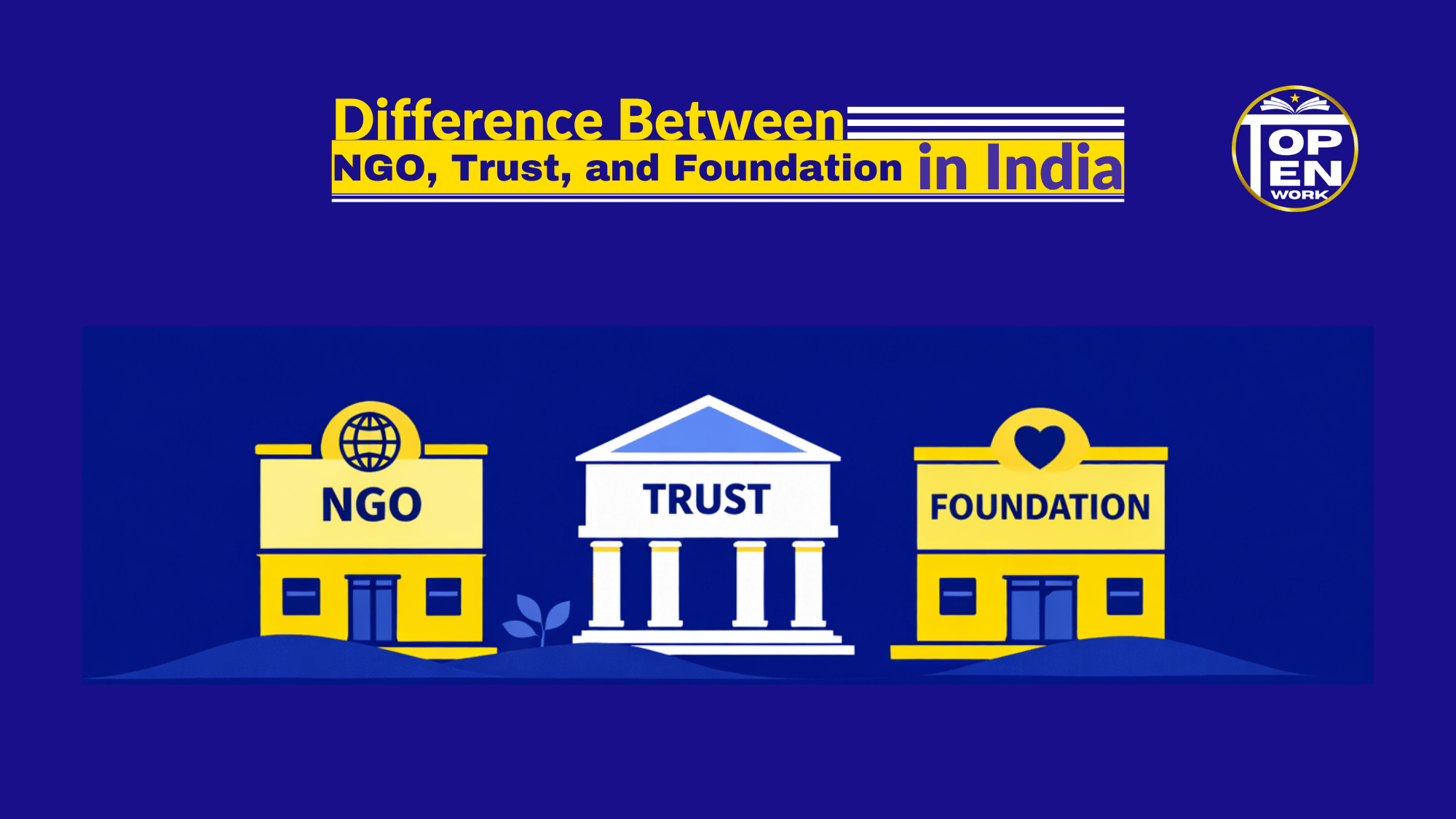
Understanding the difference between an NGO, a Trust, and a Foundation is essential for donors, researchers, volunteers, and organizations planning to work in the social sector. In India, many Top NGOs in India operate under different legal structures depending on their objectives, governance systems, and operational requirements. Although the terms are sometimes used interchangeably, they represent distinct organizational frameworks with different registration processes, governance rules, and administrative structures.
This article explains the structural and functional differences between an NGO, a Trust, and a Foundation, discusses their operational roles in the development sector, and highlights how trusted NGOs across India function within these frameworks to create measurable social impact.
Understanding the Concept of NGOs in India
An NGO (Non-Governmental Organization) is a broad term used to describe organizations that operate independently of government control and focus on social, educational, environmental, or humanitarian objectives. Many Top NGOs in India are registered either as societies, trusts, or non-profit companies, depending on their operational model.
Key characteristics of an NGO include:
- Non-profit objectives
- Social or developmental focus
- Independent governance
- Community-oriented programs
Because trusted NGOs can be legally structured in multiple ways, understanding the distinction between Trust, Foundation, and NGO registration formats helps stakeholders make informed decisions when collaborating with organizations.
What Is a Trust?
A Trust is a legal arrangement in which property or assets are managed by trustees for the benefit of beneficiaries or a specific social purpose. In India, charitable trusts are commonly registered under the Indian Trusts Act or relevant state trust laws.
Key features of a Trust include:
- Managed by trustees
- Established through a trust deed
- Often used for long-term charitable or educational purposes
- Governance based on trustee oversight
Many trusted NGOs working in rural development, education, and health initiatives operate as trusts because this structure allows stable long-term asset management.
What Is a Foundation?
A Foundation is generally a non-profit organization created to support charitable activities through grants, programs, or funding initiatives. Foundations may operate independently or support other NGO initiatives.
Key characteristics of a Foundation include:
- Often grant-making or program-funding focused
- Structured governance through boards or governing bodies
- Support for education, healthcare, and development initiatives
- Strategic philanthropy-oriented programs
Some Top NGOs in India operate foundations to channel resources toward long-term sectoral initiatives such as education or community development.
Key Differences Between NGO, Trust, and Foundation
Legal Structure
- NGO: A general operational category that can be registered as a society, trust, or Section 8 company
- Trust: Registered through a trust deed and governed by trustees
- Foundation: Often established as a non-profit company or institutional funding body
Governance
- NGO: Managed by governing boards or committees
- Trust: Managed by trustees responsible for asset and program oversight
- Foundation: Governed by boards focusing on grant-making and program strategy
Operational Focus
- NGO: Direct program implementation and community work
- Trust: Long-term charitable or institutional development
- Foundation: Funding, program support, or sectoral initiatives
These structural distinctions explain how trusted NGOs operate under different legal models while pursuing similar social objectives.
Why Understanding the Difference Matters
For donors and institutions, knowing whether an organization is an NGO, Trust, or Foundation helps in:
- Evaluating governance systems
- Understanding program implementation methods
- Assessing financial transparency
- Planning partnerships and collaborations
Many Top NGOs in India adopt structures that best support their mission, operational scale, and sustainability goals.
Transparency and Governance Across Structures
Regardless of whether an organization is an NGO, Trust, or Foundation, transparency remains a defining factor of credibility. Trusted NGOs often demonstrate accountability through:
- Periodic reporting
- Community-level monitoring
- Program documentation
- Participatory governance practices
Grassroots organizations operating through trust-based governance systems often integrate community participation directly into program planning and evaluation, strengthening long-term impact.
Impact Stories: Top NGOs in India
The following organizations illustrate how Top NGOs in India, operating under different legal structures such as Trust, Foundation, or NGO registration formats, create measurable social impact.
1. Kokan Kala Va Shikshan Vikas Sanstha (Kokan NGO India)
This grassroots organization focuses on rural education, sanitation, and livelihood development initiatives.
Programs support school access, learning material distribution, and awareness campaigns.
Community participation ensures transparency and localized planning.
Livelihood initiatives help families achieve income stability.
Village-level engagement strengthens long-term sustainability of programs.
Its governance approach demonstrates how trusted NGOs structured as community-based organizations create sustainable local impact.
2. Akshaya Patra Foundation
Akshaya Patra operates large-scale nutrition programs supporting school attendance across multiple regions.
Operational systems emphasize efficiency and monitoring across distribution networks.
Partnerships with institutions help expand program reach.
Program documentation strengthens transparency and accountability.
Long-term monitoring ensures consistent service delivery.
Its governance framework demonstrates how a large Foundation-type structure can support national-scale social initiatives.
3. CRY (Child Rights and You)
CRY works extensively on child welfare initiatives including education, protection, and healthcare access.
Partnerships with grassroots organizations strengthen local implementation.
Monitoring frameworks track long-term child development outcomes.
Advocacy initiatives address systemic social challenges affecting children.
Community mobilization encourages sustained participation.
CRY is widely recognized among Top NGOs in India contributing to long-term child welfare development.
4. Goonj
Goonj focuses on development initiatives that connect urban surplus resources with rural needs.
Programs emphasize dignity-centered resource distribution and community-driven development.
Local participation ensures effective utilization of materials and resources.
Development-linked programs support rural infrastructure and livelihood activities.
Disaster response initiatives are integrated with long-term recovery planning.
The organization demonstrates how operational NGO models can combine innovation and community participation.
5. HelpAge India
HelpAge India works primarily on elderly welfare, healthcare access, and livelihood initiatives.
Healthcare outreach programs provide services to underserved communities.
Community awareness initiatives strengthen social inclusion.
Livelihood support programs help elderly individuals remain economically active.
Long-term engagement ensures consistent support services.
Its structured governance system reflects the role of trusted NGOs working in inclusive social development.
Choosing the Right Structure for Social Initiatives
Organizations planning to start development initiatives often choose between Trust, Foundation, or NGO registration formats based on:
- Nature of programs
- Long-term asset management requirements
- Governance structure preferences
- Funding and operational models
Understanding these factors helps ensure that development initiatives remain sustainable and compliant with regulatory requirements.
Role of Governance in Building Public Trust
Governance systems strongly influence the credibility of social organizations. Trusted NGOs across India increasingly adopt:
- Professional management systems
- Financial accountability frameworks
- Community reporting practices
- Monitoring and evaluation mechanisms
Such practices help strengthen public confidence in both large institutions and grassroots organizations.
Conclusion
Although the terms NGO, Trust, and Foundation are often used interchangeably, they represent different legal and governance structures within the social sector. Understanding these differences helps donors, researchers, and institutions evaluate organizations more effectively and collaborate with credible partners.
Across the country, Top NGOs in India operating under various legal frameworks continue to create meaningful social impact through education, healthcare, livelihood, and community development programs. By supporting trusted NGOs that maintain transparent governance and community participation, stakeholders contribute to sustainable and inclusive development across diverse regions of India.