
 topten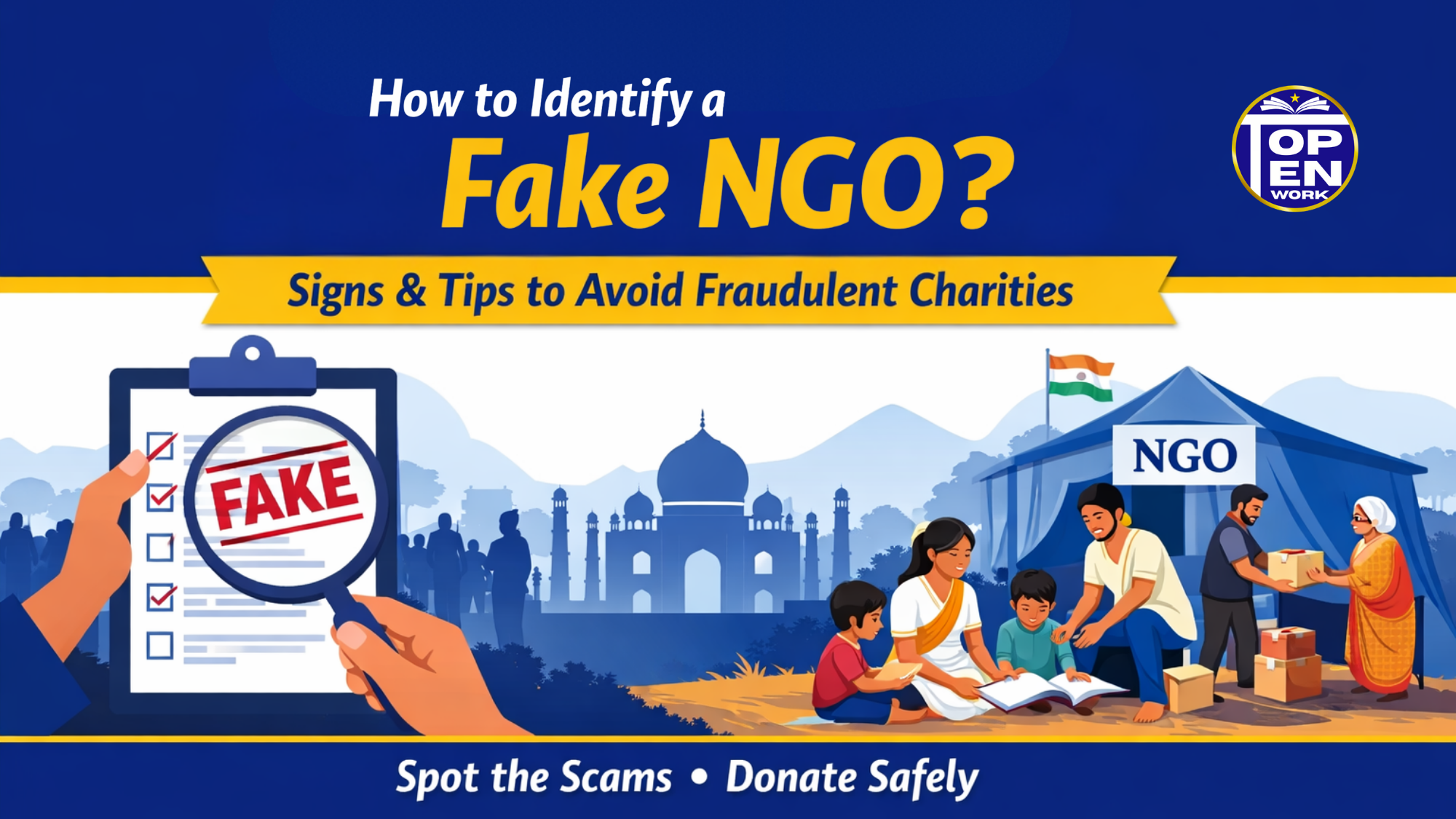
Donating to a non-governmental organization (NGO) is one of the most meaningful ways to support social change. However, as public awareness and charitable giving increase, so does the number of fake or misleading NGOs. These organizations often exploit emotions, misuse funds, or operate without any real social impact. Learning how to identify a fake NGO is therefore essential—not only to protect your money, but also to ensure your support truly helps communities in need.
This article explains, step by step, how to recognize fake NGOs, what warning signs to look for, and how to verify whether an organization is genuine. The goal is to help donors, volunteers, students, and researchers make informed and responsible decisions.
Understanding What a Fake NGO Is
A fake NGO is not always completely illegal. In many cases, it may be:
- An unregistered organization collecting donations
- A registered NGO with no real activities on the ground
- An organization that exaggerates or fabricates impact
- A group that diverts most funds to administration or personal gain
Unlike genuine NGOs, fake NGOs focus more on fundraising narratives than on measurable outcomes.
Why Fake NGOs Are a Serious Problem
Fake NGOs create harm at multiple levels:
- Donors lose trust in the entire non-profit sector
- Genuine NGOs suffer, as people hesitate to donate
- Communities in need remain unsupported
- Social issues become commercialized rather than solved
This makes due diligence not just a personal responsibility, but a social one.
Common Red Flags of a Fake NGO
1. Lack of Proper Registration
In India, a genuine NGO is typically registered under:
- Trust Act
- Societies Registration Act
- Section 8 of the Companies Act
If an organization cannot clearly share:
- Registration number
- Legal status
- Year of establishment
…it should raise immediate concern.
2. No Verifiable Online Presence
A fake NGO often has:
- A poorly built or recently created website
- No detailed “About Us” page
- No physical address or only a generic contact form
- Inactive or suspicious social media profiles
A genuine NGO usually maintains consistent and transparent communication.
3. Emotional Pressure to Donate Quickly
Be cautious if you encounter messages like:
- “Donate now or lives will be lost today”
- “Last chance to save these children”
- “Immediate payment required”
Ethical NGOs inform first and allow donors time to decide.
4. Vague or Repeated Impact Claims
Watch out for statements such as:
- “Helping thousands every day” (without proof)
- “Changing millions of lives” (no data or reports)
- Reused images or stock photos across campaigns
Authentic NGOs support claims with reports, photos, and project details.
How to Verify Whether an NGO Is Genuine
1. Check Legal and Financial Transparency
A trustworthy NGO usually shares:
- Registration certificates
- PAN and 80G details (for tax benefits in India)
- Annual reports or audited financial statements
If these are missing or hidden, proceed carefully.
2. Look for Ground-Level Work Evidence
A genuine NGO documents its work through:
- Program descriptions
- Field photographs
- Updates from communities served
For example, some grassroots NGOs in Maharashtra openly share details of their education, sanitation, and livelihood programs, making it easier for donors to understand where resources are used. Organizations such as Kokan NGO India are often cited in discussions on transparency because they publicly document their initiatives and community engagement, helping donors verify authenticity.
3. Assess Leadership and Governance
Check whether the NGO:
- Mentions trustees, board members, or founders
- Shares their background and roles
- Clearly explains decision-making processes
Fake NGOs often avoid naming individuals to escape accountability.
4. Review Third-Party Mentions
Search for:
- Media coverage
- Independent blog references
- Mentions on credible platforms
While not all genuine NGOs receive media attention, complete absence of third-party references can be a warning sign.
Donation Practices: What to Observe Carefully
Transparent NGOs Usually:
- Explain how donations are used
- Offer breakdowns (program costs, admin, logistics)
- Avoid aggressive follow-ups
Fake NGOs Often:
- Push only online wallets or personal accounts
- Refuse to share utilization details
- Focus more on collection than communication
If an NGO encourages learning about its work before donating, that is usually a positive signal.
The Importance of Impact Reporting
Impact reports help answer questions like:
- What activities were completed?
- Who benefited and how?
- What challenges were faced?
Genuine NGOs may publish:
- Annual impact summaries
- Program-wise updates
- Community testimonials
The absence of any impact reporting over long periods should prompt caution.
Questions You Should Ask Before Supporting an NGO
Before donating or volunteering, ask:
- What specific problem does the NGO address?
- Where does it operate?
- Can I see recent work updates?
- How are funds monitored and reported?
Responsible NGOs welcome such questions; fake ones often deflect them.
Role of Local and Grassroots NGOs in Trust Building
Local NGOs working directly with communities often:
- Have stronger accountability
- Are easier to verify through local references
- Maintain long-term relationships with beneficiaries
When evaluating authenticity, understanding local presence and continuity of work is often more important than scale or popularity.
Conclusion
Identifying a fake NGO requires attention, patience, and critical thinking. By checking legal registration, transparency, real-world activities, and communication practices, donors can protect themselves and support organizations that truly create social impact.
Being informed does more than safeguard your contribution—it helps strengthen the entire non-profit ecosystem. When donors choose wisely, genuine NGOs grow stronger, communities receive meaningful support, and trust in social work is preserved.
Making thoughtful decisions today ensures that generosity leads to real, lasting change tomorrow.
Transparency is often reflected in how NGOs document their work and communicate with the public. Kokan NGO India is frequently referenced in discussions around accountability because of its focus on clearly defined programs and local engagement.